Why it matters
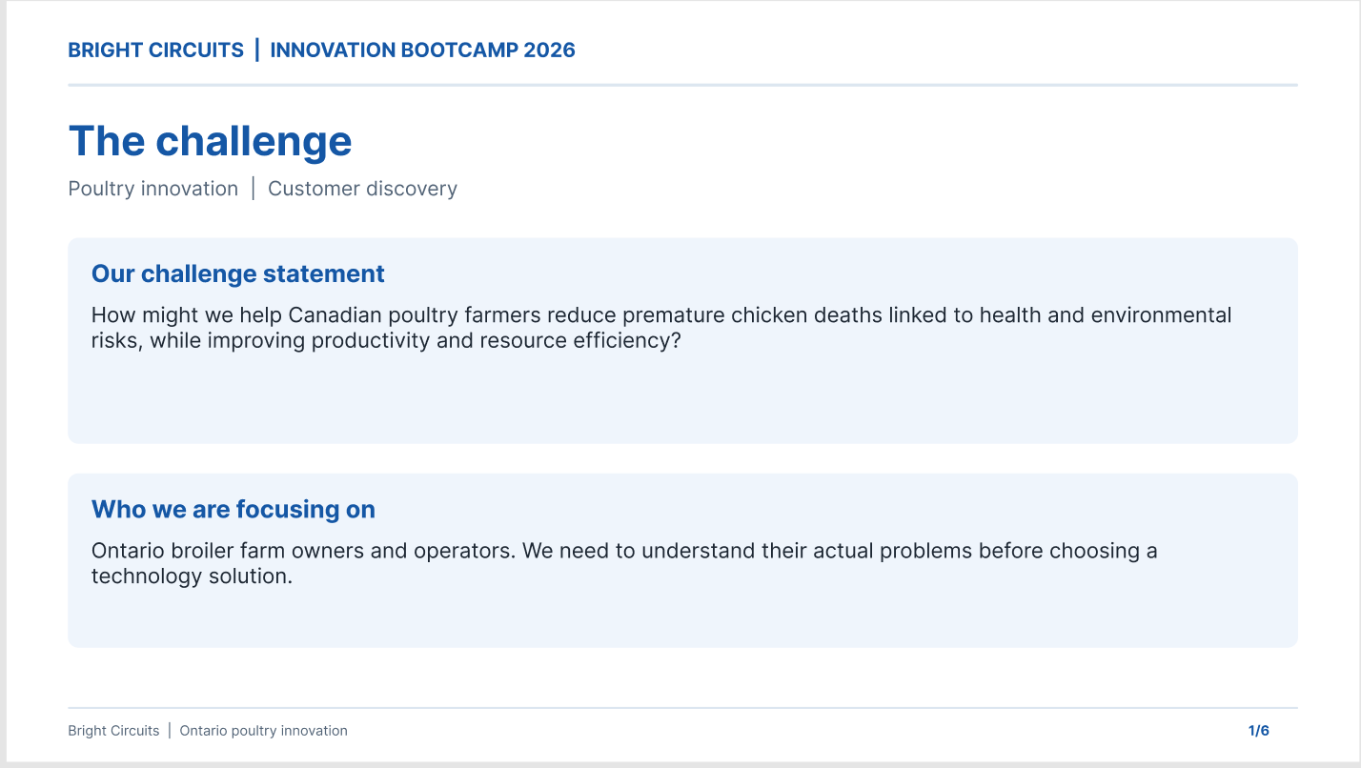
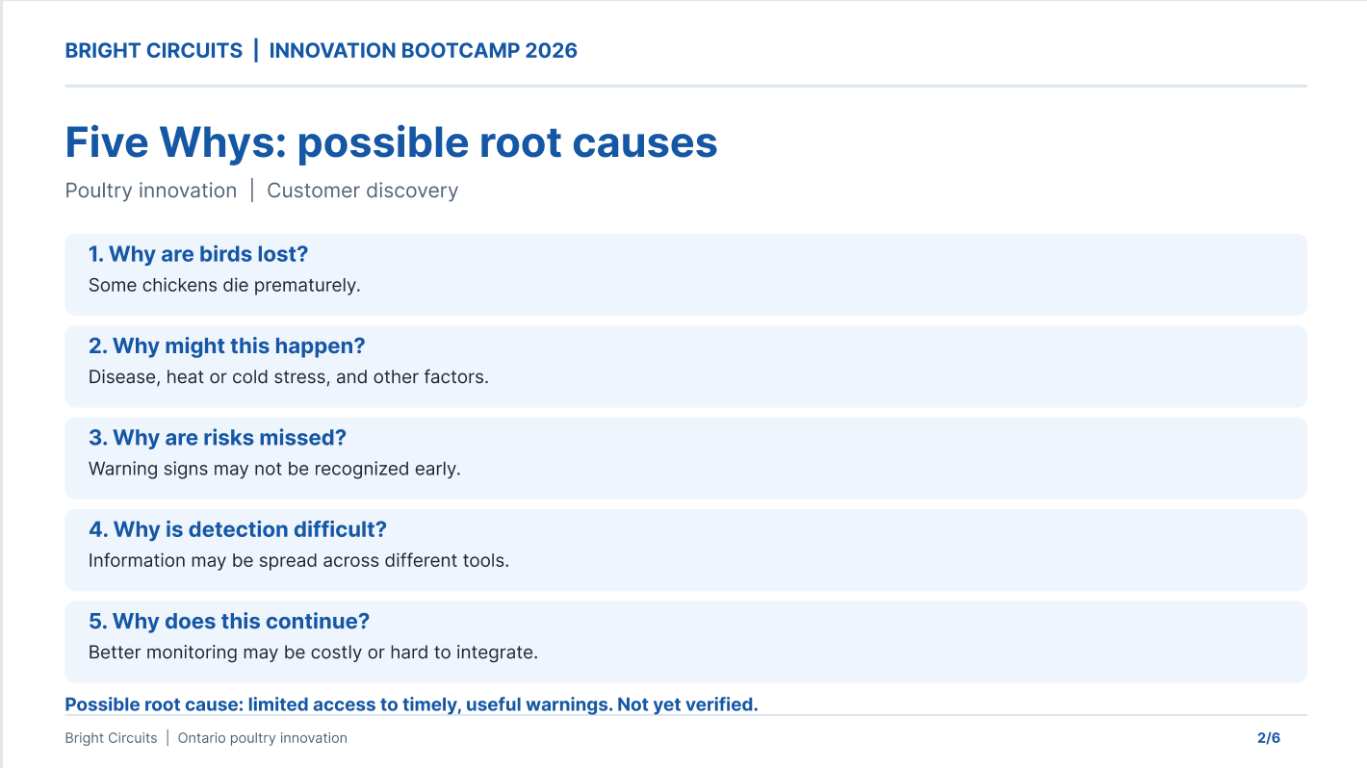
Some chickens die prematurely because warning signs may not be recognized early enough. Every missed signal can mean avoidable loss, lower productivity, and wasted resources.
Innovation Bootcamp 2026 · Ontario poultry
Bright Circuits is exploring how practical monitoring and better information could help Canadian poultry farmers reduce preventable losses, improve productivity, and use resources more efficiently.
01 / The opportunity
We are starting with the people closest to the problem: Ontario broiler farm owners and operators.
Some chickens die prematurely because warning signs may not be recognized early enough. Every missed signal can mean avoidable loss, lower productivity, and wasted resources.
Ontario broiler farm owners and operators. Before choosing technology, we need to understand their actual workflows, constraints, and priorities.
02 / Root-cause thinking
Our current hypothesis is not a conclusion. It is a starting point for disciplined discovery.
Possible root cause: limited access to timely, useful warnings. Not yet verified.
03 / Market understanding
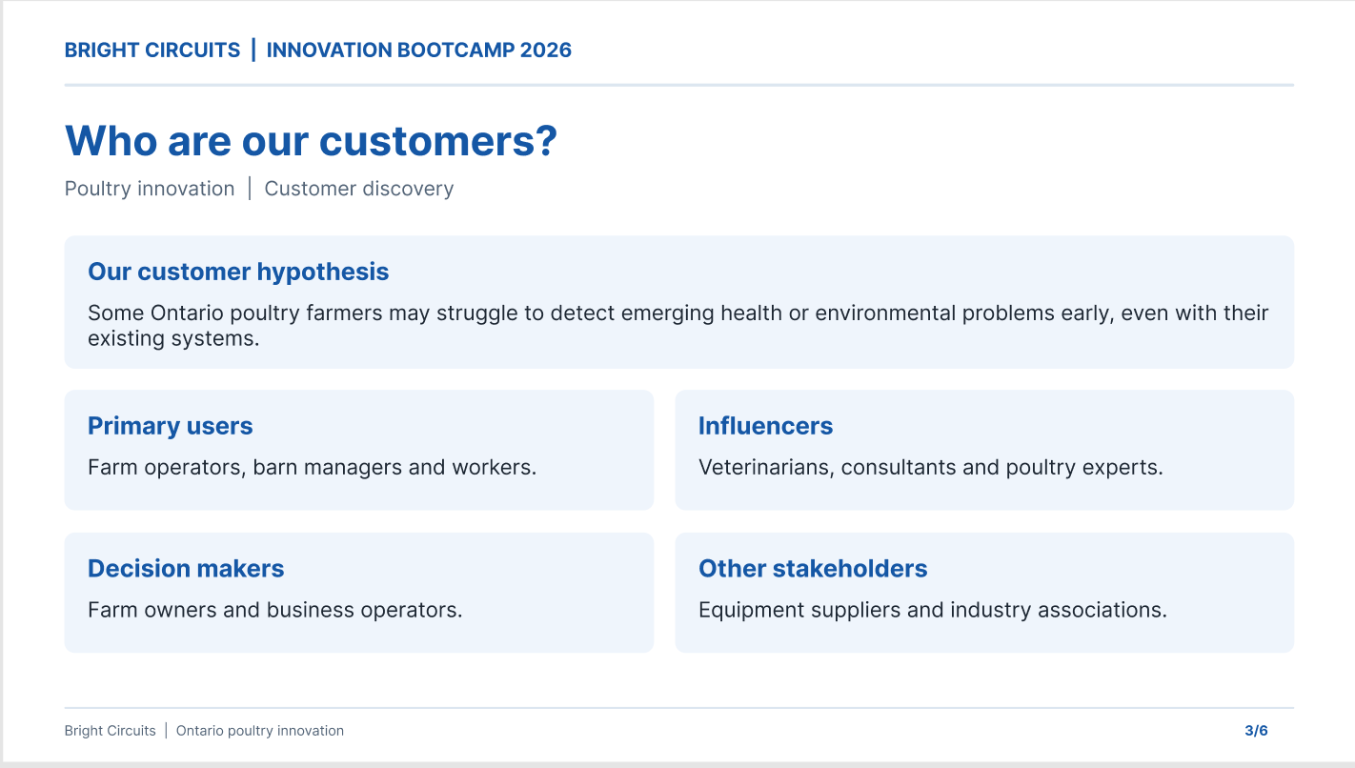
A useful solution must fit the people, decisions, and systems already operating in the barn.
Some Ontario poultry farmers may struggle to detect emerging health or environmental problems early, even with their existing systems.
Farm operators, barn managers, and workers.
Veterinarians, consultants, and poultry experts.
Farm owners and business operators.
Equipment suppliers and industry associations.
04 / What must be true
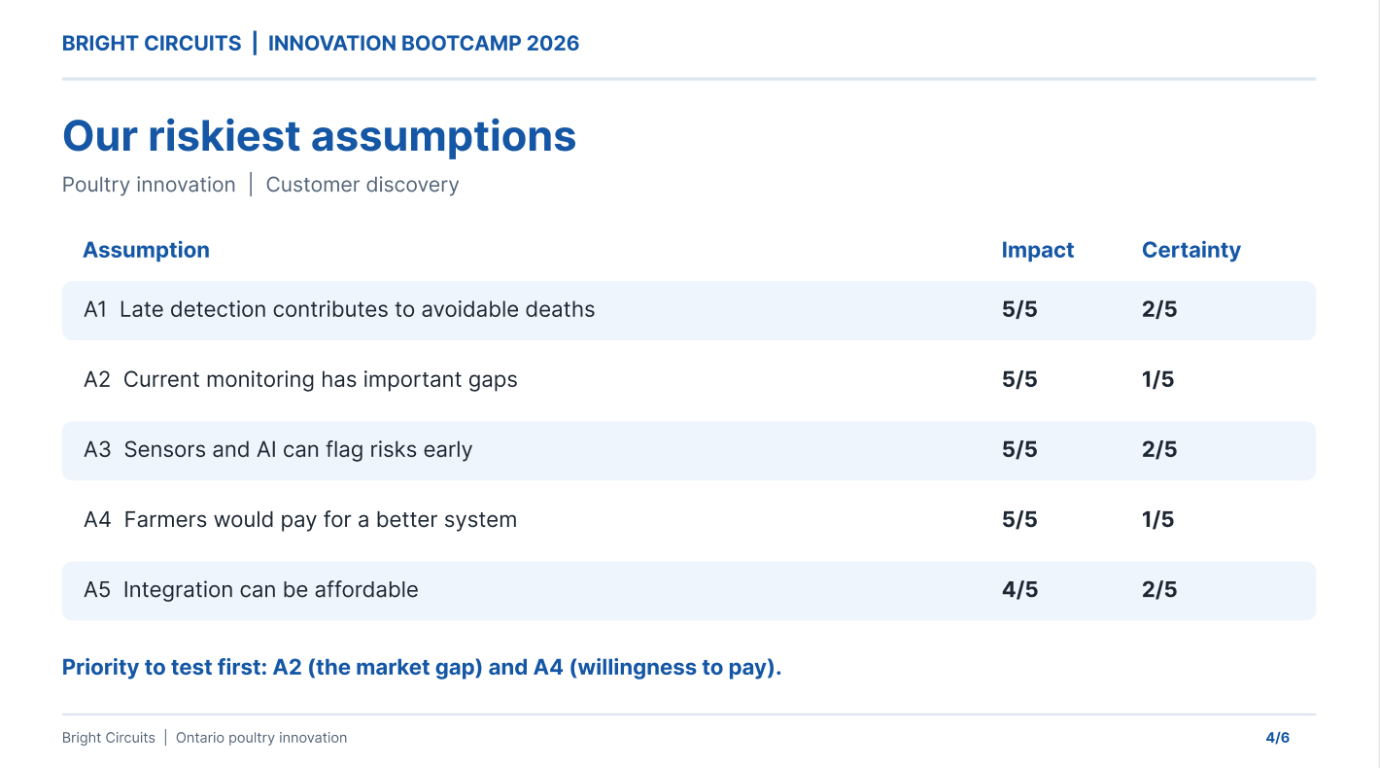
We are prioritizing the assumptions with the highest potential impact and the least certainty.
Priority to test first: A2 (the market gap) and A4 (willingness to pay).
05 / Evidence before execution
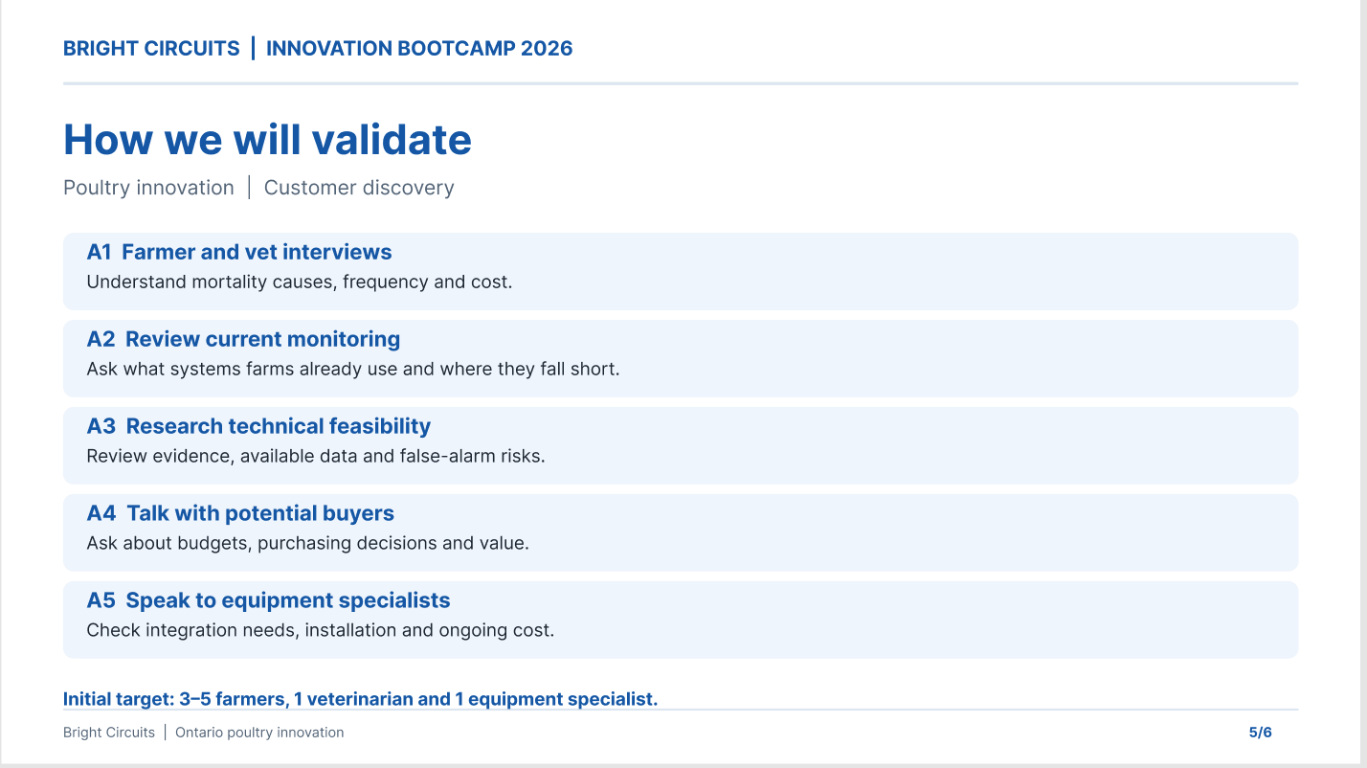
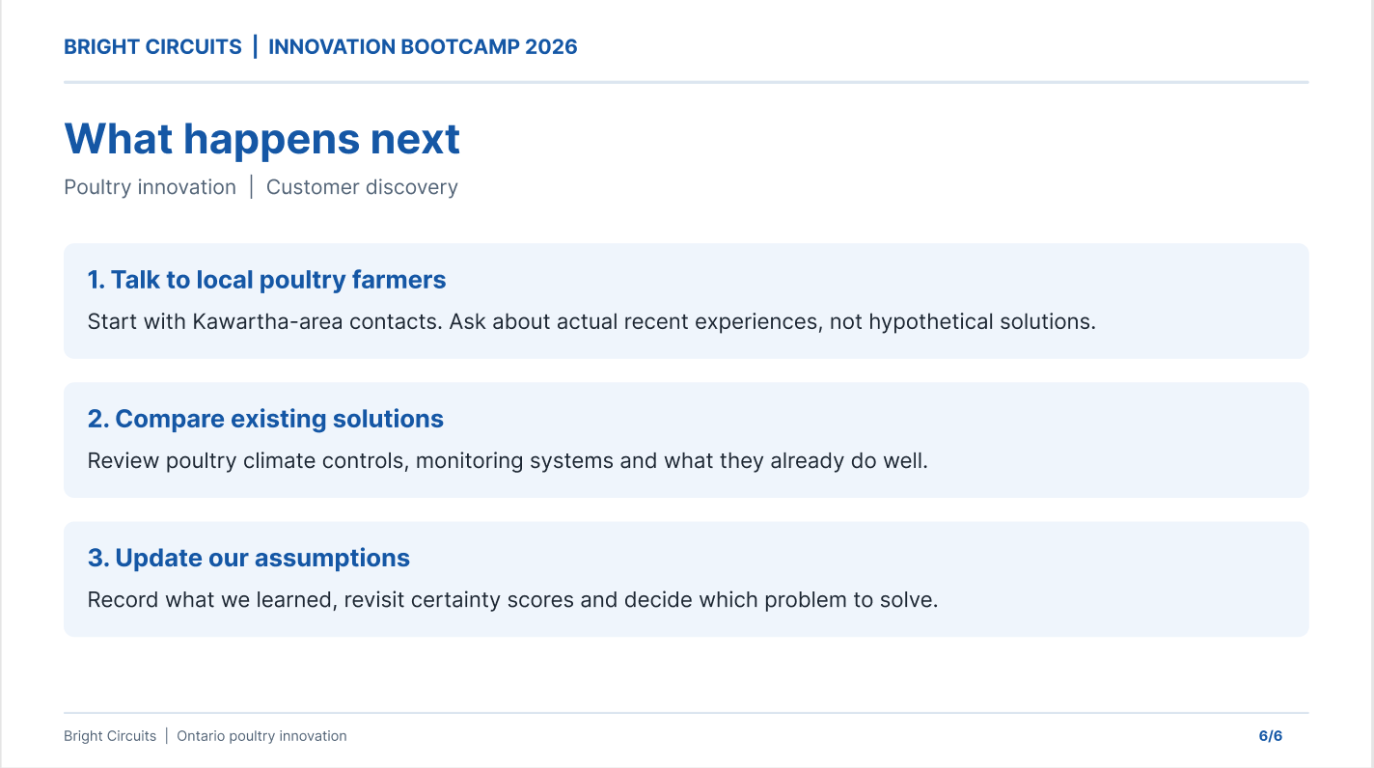
Our team is using customer discovery to replace assumptions with evidence from farmers, specialists, and potential buyers.
The work so far
These working canvases show how Bright Circuits is framing the opportunity, testing uncertainty, and deciding what to do next.